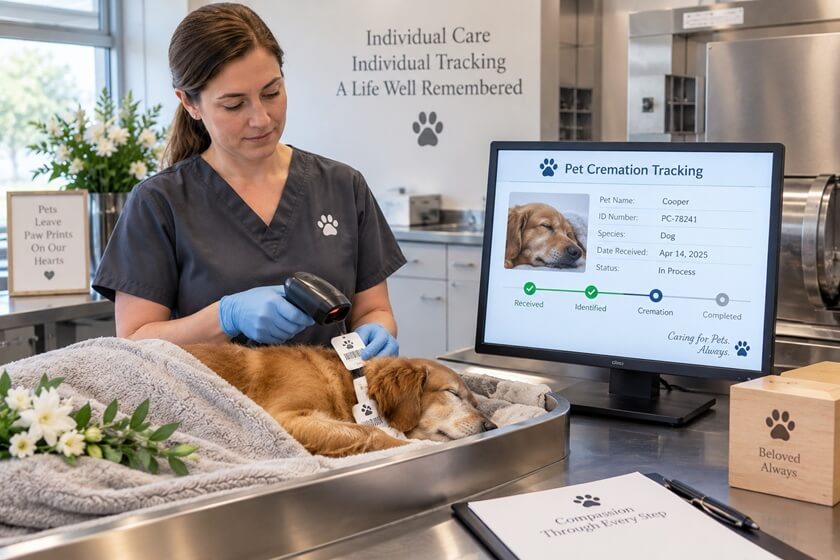
 When families place a beloved companion in professional aftercare, they deserve confidence that identification remains accurate throughout every stage. With Clayton, MO pet cremation, a structured tracking system helps keep each pet connected with the correct family information, service selections, and records. These procedures are especially important for individual cremation because careful identification supports accountability from intake through the return of the pet’s remains.
Tracking is not simply an administrative responsibility. It is an important part of respectful and organized aftercare. At Heartland Pet Cremation, we understand that families may have questions about what happens once their companion enters our care. Consistent identification procedures provide a clear framework for our team while helping families understand how individual care can be managed responsibly.
Identification Begins at Intake
Reliable tracking starts when a pet enters professional care. Document information supplied by the family or veterinary office accurately so the pet remains connected to the correct arrangements.
Important intake information may include:
- The pet’s name and identifying details
- The family’s contact information
- The requested type of service
- Memorial or return preferences
- Other instructions associated with the arrangements
The purpose is to establish a clear record that can follow the pet rather than relying on memory or informal communication. Identification is most effective when it remains part of every transition.
Staff members should be able to reference established information whenever the pet moves to another stage. This consistency creates a more dependable chain of care and helps prevent important details from becoming disconnected from the arrangements the family made.
Records Should Follow Every Stage
A tracking system remains useful only when records continue with the pet throughout the entire process. Identification should not end after intake. Instead, it should provide staff with a consistent reference as responsibilities and stages change.
Families may want to consider the questions worth asking providers before making final arrangements. Questions about identification can provide useful insight into how a provider approaches accountability.
Families can ask how:
- Identification is assigned during intake.
- Records remain associated with the pet.
- Information is verified between stages.
- Staff members handle transitions.
- Final identification is confirmed before remains are returned.
Straightforward answers can make an unfamiliar process easier to understand. Families do not need every technical detail, but they should receive a clear explanation of how identification and records are maintained.
Individual Care Depends on Accountability
Individual cremation carries a particularly important expectation. Families choosing this type of service expect the remains returned to them to belong only to their companion. Tracking procedures help support that expectation by maintaining identification throughout professional care.
Our private pet cremation service reflects the importance of individual handling and organized procedures. A dependable system should create continuity rather than relying on a single identification check.
Core safeguards can include:
- Consistent identification from intake forward
- Clear documentation associated with the pet
- Verification at important transition points
- Established procedures followed by team members
- Final confirmation before the completion of arrangements
These practices work together. A tag or record alone is not the entire tracking system. Accountability comes from maintaining and confirming information as the pet progresses through each stage.
For families, this structure can provide meaningful reassurance during an emotional period. It demonstrates that individual care is supported by repeatable procedures designed to maintain accurate identification.
Verification Provides an Extra Safeguard
Verification strengthens tracking by giving staff opportunities to confirm information rather than assuming previous details remain correct. Important transitions are natural points for team members to review identification and ensure records continue to match the pet.
A well-organized verification process also supports consistency among staff. Instead of every employee developing a different approach, established procedures provide a shared standard for handling important information.
Effective verification should focus on several principles:
- Confirm identifying information at appropriate stages.
- Keep documentation clear and accessible.
- Follow consistent procedures during staff transitions.
- Address discrepancies before proceeding
- Maintain accountability through completion of the service.
These safeguards matter because families are placing significant trust in their aftercare provider. Tracking becomes more meaningful when it is supported by active verification rather than passive recordkeeping.
The goal is not to make the experience feel overly technical. It is to create a dependable process behind the scenes so families can focus on honoring their companion while the provider focuses on responsible care.
Clear Communication Builds Family Confidence
 Families often cannot see every stage of professional pet aftercare. That makes clear communication particularly valuable. A provider should be prepared to explain how identification is maintained without overwhelming families with complicated terminology.
Helpful communication may address:
- What happens when a pet enters care
- How identification stays connected with records
- When information is checked
- How individual arrangements are maintained
- What happens before remains are returned
These conversations can help families understand what safeguards are in place and allow them to raise concerns before arrangements move forward.
Questions about tracking deserve clear answers because identification is closely connected with respectful individual care. Transparency helps replace uncertainty with useful information, giving families greater confidence in the arrangements they select.
Reliable tracking combines identification, documentation, verification, and consistent procedures throughout individual aftercare. Families should feel comfortable asking how their companion will be identified and how that information will remain connected throughout the service. At Heartland Pet Cremation, we recognize how much trust families place in the people caring for their pets. Families ready to make arrangements can coordinate care with our team and receive straightforward guidance about the process. When your family needs Clayton, MO pet cremation, call us for expert guidance and learn the important questions to ask about individual tracking and care.