 Environmental responsibility is becoming a more important consideration across many forms of pet aftercare. Families interested in Clayton, MO pet cremation may naturally wonder how newer technology can reduce environmental impact while maintaining respectful, individual care. Modern developments focus on practical improvements such as better energy efficiency, precise digital controls, improved insulation, emissions management, and alternative technologies. These advances show how the pet aftercare field can become more resource-conscious without losing sight of what families value most: dignity, careful handling, and confidence in the process.
Technology continues to change how professional facilities manage energy and equipment performance. Heartland Pet Cremation understands that families want compassionate care as well as clear information about the procedures involved. While not every environmental technology is available at every facility, understanding current innovations can help families ask informed questions and distinguish meaningful improvements from vague environmental claims.
Smarter Equipment Uses Energy More Efficiently
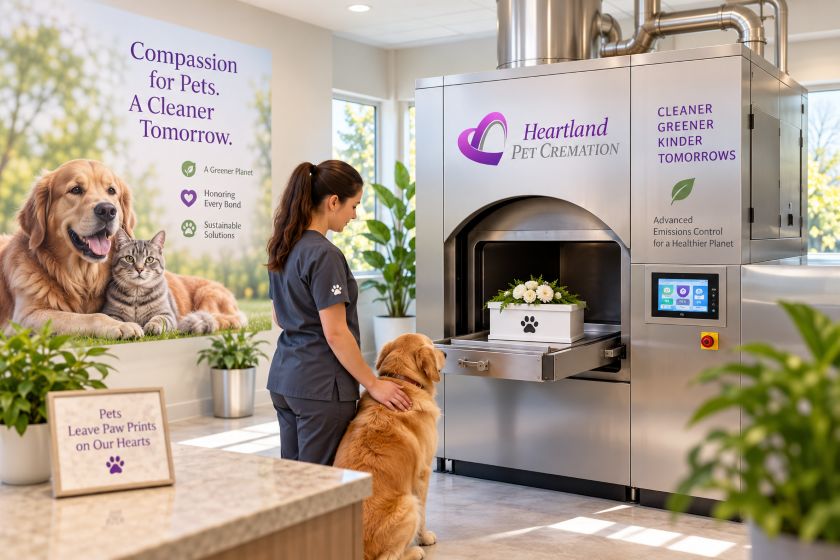
One important area of innovation is energy efficiency. Modern equipment can incorporate better insulation, improved chamber design, and digital controls that help operators maintain appropriate conditions without using unnecessary energy. Equipment manufacturers are also developing systems with programmable controls and oxygen monitoring designed to support efficient operation.
Several improvements can contribute to better energy management:
- High-quality insulation helps retain heat.
- Digital controls provide more precise operating information.
- Oxygen monitoring can support efficient equipment performance.
- Improved chamber designs can help maintain stable conditions.
- Automated systems can provide more consistent control throughout a cycle.
These features matter because environmental performance depends on more than one component. Equipment design, maintenance, operator training, and daily procedures all influence efficiency.
Technology is therefore most useful when it supports responsible professional practices. New equipment alone cannot replace careful operation, but better controls can give trained professionals more information for making appropriate adjustments.
Emissions Controls Continue to Improve
Cleaner operation is another major focus of equipment development. Modern systems can use secondary chambers, improved airflow, monitoring technology, and filtration options to help manage emissions. Industry guidance also emphasizes appropriate maintenance and careful temperature control as important parts of responsible operation.
Families interested in sustainability may find it useful to understand environmentally responsible aftercare practices rather than relying solely on an “eco-friendly” label.
Important questions can include:
- How old is the facility’s equipment?
- What systems are used to monitor performance?
- How regularly is equipment maintained?
- Are emissions-control features incorporated?
- How does the provider approach energy efficiency?
These questions focus on practices that can actually be explained. Environmental responsibility is more meaningful when a provider can describe what its procedures and equipment are designed to accomplish.
Electric Systems Offer New Possibilities
Electric cremation technology represents another developing approach. Unlike conventional equipment that relies directly on fossil fuels at the facility, electric systems use electricity to produce the required heat. Their overall environmental benefit depends partly on how that electricity is generated, so electric technology should not automatically be treated as impact-free.
Newer systems can offer:
- Reduced direct reliance on fossil fuels
- Precise electronic temperature management
- Programmable operating controls
- Improved monitoring capabilities
- Opportunities to benefit from cleaner electrical grids
Hybrid equipment is also emerging. These systems combine electric technology with another energy source, allowing operators to use different modes during various parts of operation.
Regardless of the equipment involved, individual care remains essential. A professional pet cremation service should keep respectful handling and accurate identification central to the family’s experience while technology supports the process behind the scenes.
Water-Based Technology Expands the Conversation
Another innovation receiving attention is alkaline hydrolysis, sometimes described as water-based cremation. This process uses water, an alkaline solution, controlled temperature, and circulation rather than conventional flame-based equipment. Cornell University’s College of Veterinary Medicine reports that its HydroCremation system uses substantially less energy than conventional methods and produces dry mineral remains that can be returned to families.
Availability depends on local laws, regulations, and individual providers, so families should confirm which options are actually offered in their area.
Water-based systems have attracted interest because they can offer:
- Lower energy consumption in some applications
- Reduced direct greenhouse gas emissions
- Individual identification and tracking capabilities
- A different approach to processing remains.
- Another option for environmentally conscious aftercare
This technology does not make traditional cremation obsolete. Instead, it broadens the conversation about how the profession can respond to changing environmental priorities while continuing to provide dignified care.
Sustainability Goes Beyond the Equipment
 Technology receives considerable attention, but responsible aftercare involves more than the cremation equipment itself. A facility’s environmental footprint can also be influenced by maintenance, scheduling, transportation, packaging, materials, and everyday operating practices.
Families can therefore look beyond impressive technical terminology and consider the complete approach. Responsible practices include maintaining equipment for efficient operation, reducing unnecessary materials, selecting thoughtful memorial products, and organizing transportation efficiently.
The greatest environmental improvements are often practical ones:
- Maintain equipment according to professional standards.
- Monitor performance consistently.
- Reduce unnecessary resource use.
- Consider lower-impact materials where appropriate.
- Use technology to support accurate, efficient procedures.
Innovation should ultimately serve both families and responsible operations. The most valuable advances improve control, reduce unnecessary environmental impact, and preserve the respectful standards families expect.
Eco-friendly cremation technology continues to develop through improved energy management, emissions controls, electric and hybrid equipment, and water-based alternatives. Families do not need to become technical experts to make thoughtful decisions. Asking clear questions about equipment, environmental practices, identification, and individual care can provide useful insight. At Heartland Pet Cremation, we recognize that compassionate aftercare should give families confidence during a difficult time. Those preparing for a companion’s care can make arrangements with our team and discuss the services available for their circumstances. When you need Clayton, MO pet cremation, call us for expert guidance and choose aftercare centered on dignity, responsible practices, and respect for your companion.