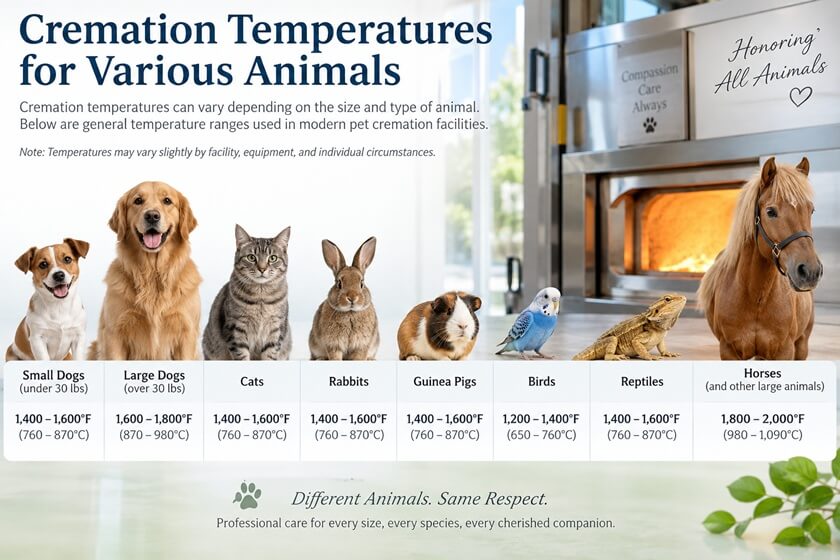
 Families often wonder whether every companion receives exactly the same technical treatment during aftercare. With Ballwin, MO pet cremation, the answer is more thoughtful than simply choosing one temperature for every animal. Professional cremation equipment operates within controlled high-temperature ranges, but trained operators consider factors such as the animal’s size, bone structure, body composition, and equipment conditions when managing a cycle. These differences help explain why responsible pet aftercare relies on professional monitoring rather than a single setting for every companion.
We believe understanding these basic differences can make professional aftercare feel less unfamiliar. Heartland Pet Cremation provides private services in which pets are cared for individually, helping families feel confident about the remains returned to them. Trained professionals handle the technical details, while families can focus on remembering the relationship they shared with their companion.
Why Animal Size Matters
A small cat and a much heavier dog differ considerably in body mass, bone structure, and overall composition. Those physical characteristics can affect how professionals manage the cremation cycle. Size does not mean one animal deserves a different standard of care. Instead, it means equipment must be operated appropriately for the individual pet.
Important factors can include:
- Overall body weight
- Bone density and skeletal structure
- Body composition
- Chamber conditions
- Equipment design and operating requirements
Professionals evaluate these factors together rather than relying on size alone. A smaller animal may require different monitoring than a larger, heavier companion because the amount and density of physical material are different.
This is one reason experienced operation matters. Temperature is only one part of a controlled process. Timing, airflow, equipment performance, and careful observation also contribute to consistent handling. The goal is to use an appropriate professional process for the individual animal while maintaining dignity throughout care.
Species Can Affect the Process
Dogs and cats are the companions families most commonly associate with pet aftercare, but rabbits, birds, and other family pets also have physical differences. Even animals of similar weights can have different skeletal structures and body compositions.
Understanding how pet size affects cremains helps put these differences into perspective. The amount ultimately returned to a family can vary according to size, species, and bone structure.
Professionals may consider characteristics such as:
- Whether bones are relatively light or dense
- The animal’s overall proportions
- Differences in body composition
- The amount of physical material being handled.
- How the equipment responds throughout the cycle
These variables are why it is misleading to assume that every pet follows an identical technical formula. Professional care requires attention to the individual animal and the equipment being used.
Families generally do not need to understand operating specifications themselves. What matters is choosing a provider that follows established procedures and can explain its approach clearly when questions arise.
Temperature Is Only One Factor
It is easy to focus on temperature because it sounds like the defining measurement of cremation. In practice, professionals must consider several operating factors together. Proper equipment management involves maintaining controlled conditions throughout the process, not simply reaching a particular number.
A professionally managed pet cremation service combines individual care with procedures designed for respectful handling. Heartland states that its private service handles one pet at a time, helping ensure families receive only their companion’s remains.
Key operational considerations can include:
- Maintaining appropriate chamber conditions
- Monitoring the progression of the cycle
- Managing airflow correctly
- Allowing sufficient processing time
- Following equipment operating standards
These factors work together. Changes in an animal’s size or physical composition can affect how a professional monitors the process, but that does not mean care becomes less consistent. Instead, the operating approach is adjusted responsibly within professional procedures.
Larger Pets May Require More Time
Body mass can influence how long a cremation cycle takes. A heavier animal contains more physical material than a small companion, so completing the process may require more time and careful equipment management.
This does not mean that professionals increase temperatures whenever an animal is larger. Effective operation involves balancing temperature, time, airflow, and chamber conditions. Equipment also has specific operating parameters that trained personnel must follow.
For families, several points are worth remembering:
- Larger size can affect processing time.
- Bone structure can influence the final remains.
- Similar-sized pets may still differ physically.
- Temperature alone does not determine the quality of care.
- Professional monitoring remains important throughout the cycle.
These distinctions help prevent oversimplification. Two pets may not require identical operating conditions even when they belong to the same species. Responsible care accounts for individual physical characteristics while maintaining consistent identification and respectful handling.
Consistency Comes from Professional Control
 Professional cremation procedures are not meant to create one rigid setting for every animal. They provide controlled, dependable care while accounting for relevant differences between individual pets.
Families considering arrangements can ask how a provider manages individual services, maintains identification, and monitors its equipment. Clear answers can help families understand whether procedures are organized and consistent.
Professional control matters because several variables can change from one companion to another. The animal’s size, skeletal characteristics, and body composition can influence the technical process. Equipment specifications can also differ between facilities.
What should remain consistent is the provider’s commitment to:
- Respectful individual handling
- Accurate identification
- Controlled equipment operation
- Careful monitoring
- Clear communication with families
Those standards help turn technical procedures into dependable aftercare.
Understanding why cremation conditions can vary helps families see that professional pet aftercare is not based on a universal setting. Size, species, bone density, body composition, equipment, airflow, and processing time can all influence how trained professionals manage an individual service. At Heartland Pet Cremation, we understand that families want both compassionate treatment and confidence in the procedures behind it. Families preparing for a companion’s aftercare can make arrangements with our team and receive straightforward guidance on available services. For Ballwin, MO pet cremation, call us for expert guidance and receive support centered on dignity, careful handling, and respect for the bond you shared.